Category Archives: Biblical Studies

Theology of Hell #1

“What do you believe about hell?” She said earnestly.

That was a problem.  We were supposed to be discussing the life of Jesus.  I had invited this couple over along with several other friends to eat food, vent about our jobs and stresses, and read scripture.  Our lives were the serious things, the theology wasn’t supposed to be.  We were supposed to discuss divorcing friends, quitting or getting fired from jobs, how scary it is to talk to our neighbors.  Life was scary, not the theology.  I said the wisest answer possible, “I don’t know.”

I knew stuff about hell, but I still don’t “know” hell.  When it comes to the afterlife, I have no firsthand experience.  Is there fire?  Do people continue in agony forever?  Is it God’s idea?  Where is it at? I resolved to look for answers.  I followed with, “I’ll find out.”

So, to continue my theological explorations of terrible, dreary, and scary things (see last January’s “Brief Theology of Miscarriage” http://wp.me/p5pi3B-h); I present a theology of hell.  It was supposed to be brief.  Then my wife in her wisdom said, “That’s not brief.  You should chop it up.”

First off, hell presents a scriptural problem.  Not because of too few references, as is the case with miscarriage.  Hell or judgement by fire is mentioned over one hundred and thirty times in scripture.  From all these references questions arise.  Where is hell?  What is it like?  How absolute is it?  And most importantly, how do I not go there? Add to all these other questions the fact that there is a gradual progression of cosmology – how the universe is structured – and eschatology – how everything ends – in scripture.  Instead of chasing every loose end, I will examine just Jesus’ statements from the Gospels on hell.  Why Jesus?  If you believe he is the Son of God, then his opinion on the afterlife is pretty important.  Jesus references hell using three words or phrases: gehenna, hades, pur.

Gehenna

“Whoever says, ‘You fool,’ shall be guilty enough to go into the fiery hell.” (Matt 5:22 NASB)

Jesus invents hell.  That is to say, if you are using a very literal translation of the Greek or Hebrew from scripture the word “hell” won’t occur until Matthew 5:22.  Jesus is repurposing the word gehenna to mean hell. Today the valley of Ge Hinnom is a place you can visit, and it is pretty scenic.  You can drive down Gey Ben Hinnom Street just south of old town Jerusalem.

Why would Jesus reference this scenic valley to discuss the severity and danger of anger, judgment, and sin in general?  The valley of Hinnom, ge hinnom, is a pretty evil zip code in Jeremiah 7:31.  In this valley just outside of Jerusalem, people were performing child sacrifices.  Also, during the gap between the writing of the Old Testament (OT) and the New Testament (NT) the idea that a valley or pit would be the place of end times torment enters Jewish thought (1Enoch 27:2; 4Ezra 7:36).  When Jesus says gehenna, he is using his audiences’ understanding that 1) the Hinnom Valley is an evil or tainted place, and 2) that end-time torment involves a pit or valley.  Let’s look at the “flavors” of how Jesus uses gehenna.

Do Anything to Avoid Passages

“If your right eye causes you to sin, tear it out and throw it away. For it is better that you lose one of your members than that your whole body be thrown into hell.” (Matt 5:29 NASB)

These are some of the scariest verses in scripture.  Jesus wanted them to be.  If your body is causing you to sin, you are better off with self-mutilation than hell.  Pluck out your eye; chop off your hand.  Matt 5:29-30; Matt 18:9; Mark 9:43-47 all have this idea of mutilation to avoid sin in order to avoid hell, but listen to the hyperbole.  The context of Matt 5:29-30 is Jesus’ teaching on adultery.  Jesus wouldn’t tell an adulterer, “Oh you plucked out your eyes!  All good now.”  The context of Mark 9:43-47 is causing “little ones” to sin.  Jesus wouldn’t tell a lead-others-to-sin amputee, “You lost your hand! That made it all better.”   These passages are hyperbole, but not because they overestimate the severity of sin or the extremes that should be taken to avoid hell.  Jesus is overplaying what “causes” – skandalizw – to snare, to cause to stumble – sin.  He reveals a more fleshed out theology on human corruption in Matthew 15:18-29; Mark 7:20-22.  “Out of the heart” is the source of evil.  Your eye can’t force you to sin.  Your hand can’t make you do evil.  You make you sin.  Jesus is playing up to the audience, “Do whatever it takes to avoid hell,” but he hasn’t revealed just how drastic the measures will be.  And remember, these are Jews who might say, “We have Abraham as our father,” which meant that God was categorically on their side (Matt 3:9).  He is teaching that sin is dangerous; hell is a possibility; and you should do anything to avoid both.

Judging Passages

“You serpents, you brood of vipers, how shall you escape the sentence of hell?” (Matt 23:33 NASB)

Jesus is kind and merciful to a lot of people: tax collectors, adulterers, zealots/terrorists, gentiles, crazed demoniacs, old Pharisees, etc.  However, he doesn’t shy away from judgment.  Matt 23:15, 33 detail how Jesus is pronouncing “Woe” against the Pharisees.  These were Jewish religious guys whose mission in life was to be righteous enough and train enough disciples to usher in God’s kingdom. Interestingly, v23 details how the Pharisees and scribes are in trouble for not showing “justice and mercy and faithfulness” while overemphasizing super tithing.  The root for the word justice is krisis, which is the same root for “the sentence/judgment of hell.”  They neglected justice; they will know the krisis of gehenna.

Mat 23:15 is condemning the Pharisees’ whole disciple-making enterprise, “you travel around on sea and land to make one proselyte; and when he becomes one, you make him twice as much a son of hell as yourselves” (Mat 23:15 NASB).  This verse is less intense than v33, but it does undercut half of the Pharisees’ game plan.  Their making disciples isn’t bringing God’s kingdom closer but instead advances gehenna.

“But I say to you that everyone who is angry with his brother shall be guilty before the court; and whoever shall say to his brother, ‘Raca,’ shall be guilty before the supreme court; and whoever shall say, ‘You fool,’ shall be guilty enough to go into the fiery hell.” (Mat 5:22 NASB)

Here is the progression laid out in this verse.  Anger => court; Raca/Empty-one => supreme court; Fool => fiery gehenna.  This passage is part of Jesus’ super expansion of the Mosaic law. “Don’t commit adultery” now is don’t look lustfully.  “Don’t swear falsely” now is don’t swear.  We are way past “Don’t murder.” Insults are worthy of hell.  Jesus is using gehenna here as a warning, but notice that the language is court room language.  Read v23-26.  All those words for court and judge are krisis words.  Unlike the Pharisees that would say, “Take care of the dill and mint tithes before the krisis,” Jesus is saying, “Leave the altar, pause the temple stuff!  Run and take care of krisis right now.”  Jesus is teaching that hell is a just response to our refusal to be just.

Who Is the Boss Passages

Matt 10:28; Luke 12:5

“But I will warn you whom to fear: fear the One who, after He has killed, has authority to cast into hell; yes, I tell you, fear Him!” (Luke 12:5 NASB)

Luke 12:5 and its parallel in Matt 10:28 come after Jesus’ warning about future persecution.  Luke 12 is more centered on the Pharisees challenging and silencing the message.  Matt 10 is more broad and end-timesy.  From either passage, Jesus’ message is, “They (Pharisees/World in general) will try to stop you.  Don’t fear them.  Fear God.”  And why should they fear God?  God has authority over hell.  The smiter has the smite button.  However, both Luke and Matthew pair this fear passage with, “Fear not; you are of more value than many sparrows” (Matt 10:31; Luke 12:7).  The root word for the verb “fear not” and the noun “fear” in these passages is phobos, which is common everyday fear.  Jesus warns about hell, but he tells us to fear the God who is the boss of hell.  However, the boss cares for us more than we can imagine.

What do we learn about Hell from how Jesus uses gehenna?

Most importantly, God is the boss of hell, and this should be a source of comfort.  Our imaginations have run wild with the concept of hell.  We think the devil sits on a throne and commands legions of biker-gangs who are eternally partying.  God is the boss.  There are no demons that will drag you there.  And no earthly judgment can send you there.  There is no dualism for Jesus.  There isn’t a kingdom of darkness with skills and forces strong enough to pose a real threat.  He knows his followers will die from persecution just like he will, but it is only a flesh wound.

Hell is not unjust.  We are unjust.  The Pharisees were much better at their religion than you ever will be.  They tried to follow every law, but they couldn’t produce an ounce of justice.  It is important that we see Jesus pronouncing judgments or sentences.  Hell is not an accidental place.  God doesn’t look at those in hell and say, “Oops!  That one was a mistake.”

Now that we have laid out that God is the boss, and hell is not unjust, there is a big question.  What is hell?  After all, gehenna was a place Jesus could point to.  This was part of the reason he references the valley in his teaching.  We say, “in hell” and “in heaven,” but can you pull them up on a map?  From these passages, we haven’t determined much about the character of hell.  We just know it is connected to sin, and we should try to avoid it.  But since Jesus is so severe in these passages, it is safe to assume he is not joking.  That is to say, sometimes people read gehenna passages and begin analogizing and making everything metaphor.  Does Jesus sound like he wants us to make gehenna less scary?  Since Jesus invented hell, we will have to study the other ways he references it to understand more of its nature and character.  Next time is hades.

God’s Commands: Leviticus 18-27

It’s been a while.  Everything is changing.  God’s word stays true forever.  Last time we heard all of the imperatives regarding offerings, emissions and food.  Now we turn to the imperatives that are more severe in tone.

Lev 18:2 “Speak to the people… I am the LORD your God.”  The first command of this section is for Moses to tell the people that who their boss is makes them different.  If you are going to be different from Egypt, you can’t act like Egypt.  This is the context of the following commands on uncovering nakedness.  Apparently the Egyptians were nudists.  And what’s the promise?   If the Israelites do these things, “lest the land vomit you out” (18:28).

Lev 19:2 “Speak to all the congregation… you shall be holy for I the LORD your God am holy.”  This introduces a loosely held together section running to 20:26.  The binding theme is holiness.  Statutes based on who God is and less on how not to be like other people (although 20:23).  Lev 19 has: revere parents (v3); make acceptable offerings (v5); leave some harvest for the poor (v10); oppression, injustice and vengeance aren’t okay (v11-18); instructions on everything from concubines to scales (v19-36).

Lev 20 has no imperatives.  The passage deals with potential problems and future promises.  Notice all the “if” statements.

Lev 21:1 “Speak to the priests… no one shall make himself unclean for the dead.”  There are lots of exceptions for family members, but priests are supposed to have a different loyalty.  Why?  “They offer the LORD’s food offerings, the bread of their God” (v8).

Lev 21:17 “Speak to Aaron… none of your offspring… who has a blemish may draw near.”  Pretty harsh.  God already took one of Aaron’s sons.  Being a priest is a serious deal.  If someone is going to do it right, they will have to be perfect.

Lev 22:2 “Speak to Aaron… abstain from the holy things.”  What?  Aren’t priests supposed to be around holy stuff all the time?  This idea is supposed to be connected to “while he has an uncleanness” (v3).  The priests’ job isn’t getting any easier.

Lev 22:18-19 “Speak to Aaron and… all the people of Israel, ‘When anyone presents a burnt offering… if it is to be accepted for you it shall be a male without blemish.”  At a meeting of medical missionaries and supporters I heard the quote, “No junk for Jesus.”  I think that applies here.  A sacrificial system completely breaks down if you start bringing junk.  God shouldn’t have to command this, but he knows his people.

Lev 23:2 “Speak to the people… ‘These are the appointed feasts.”  God commands Moses four times in this chapter to speak to the people about feasts and calendar stuff.  This first section covers the two most important.  The Sabbath is to be a day of “no work” (v3).  The Passover and Feast of Unleavened Bread create a whole week of offerings capped by a day of rest.  Unlike Exo 20:11 or Exo 12:17 and other times that Sabbath or Passover is mentioned, there is not a “Why do we do this?” in Lev 23.  God has the right to set the calendar.

Lev 23:10 “Speak to the people… bring the sheaf of the first-fruits.”  If you aren’t a farmer, a “sheaf” is a bundled up stack of grain.  Think of those grain bundle things that you see around caricatures of pilgrims at Thanksgiving.  This idea is bigger than grain.  All produce is offer-able (v13).  Then seven weeks plus fifty days later is the ‘feast of weeks’ although that name isn’t in the text.  Essentially, the people are to thank God for stuff popping out of the ground and for a good harvest at the end.  So the actual ‘no work day’ is at the end of the Feast of Weeks  (v21).

Lev 23:24 “Speak to the people… observe a day of solemn rest, a memorial proclaimed with blast of trumpets.”  I don’t know.  For me rest doesn’t equal trumpet blowing.

In v26 there is no imperative introducing the Day of Atonement.  It still is a no work day (v28), but it has been intricately described earlier in Leviticus 16.

Lev 23:34 “Speak to the people… for seven days is the Feast of Booths to the LORD.”  This is the only feast day with the ‘to the LORD’ designation.  The description of this feast is very vague here, but essentially everyone is to go camping on order to remember the Exodus.

Lev 24:2 “Command the people… to bring pure oil for the lamp.”  This tsavah is more intense than the “speak” of our previous imperatives.  Who keeps the lamps burning?  The people do.

Lev 24:14 “Speak to the people… ‘Whoever curses God shall bear his sin.'” Seems fair enough.  You curse God, you bear the consequences.  However, in 2015, can we be okay with a God who commands the death penalty for religious belief?  It happened.  Deal with it.

Lev 25:2 “Speak to the people… ‘The land shall keep a Sabbath to the LORD.'”  After seven years the land gets a break.  Letting a field go unused or rotating crops is a wise farming practice.  But, what God is getting across is that Sabbath provides food (v6).  That is the opposite of a Black Friday world.

Leviticus 26 has no imperatives.  It is more of a “when you get there” passage.  It ends with stark warnings of how God will personally deal with sin, and it promises exile.  “Then the land shall enjoy its Sabbaths… while you are in your enemies’ land” Lev 36:34.  Notice that this promise of destruction is not tied to a “You turned to other gods” idea but that the people will not do what God asked concerning Sabbath, proper sacrifice, purity, etc.

Lev 27:2 “Speak to the people… if anyone makes a special vow.”  This chapter is so weird to us.  Jacob is the first person to do this in scripture (Gen 28:20-22).  In short, due to intense circumstances you promise to devote something to God. Jacob said a specific amount, but you could just name a person or animal.  You can’t fully devote land because God hands out the land as ancestral heritage (Lev 27:24).  But, you can devote the produce of the land or potential produce of the land.  In the case of a person devoted, you must redeem them by paying money to the temple.  For an animal the option is to pay the money or hand over the animal to become property of the temple.

This system seems so bizarre to us.  Think of your prayer life.  Usually in times of panic we ask God for something.  Heal me.  Save me.  However, the Israelites in moments of panic offered things to God.  At worst, this was viewed as perfunctory transaction, but at best, this is a preemptive offering of gratitude for God’s deliverance.  “I will give this to God because of the good he will do.”

That’s Leviticus.  We saw over and over that God’s commands in this usually “boring” book are actually a tale of intimacy.  You set up house rules because you want to live with someone.  Now it’s time for the people to start heading where they are supposed to live.  The Hebrew title for the next book is “In the Wilderness”, but English bibles have “Numbers” because counting is important.

God’s Commands: Leviticus 8-17

Whales are not common.  But, I have seen one every August in Alaska.  God’s instructions aren’t common.  We don’t find his plans under every rock and behind every door.  How many of us have languished waiting for God’s next step.  Yet, when we read Leviticus we read it as oppressive.  The book of law is also a book of intimacy.  God speaks into every facet of the ex-slaves lives.  God had been silent for 400 years.  Now they are getting a buffet of speech.  God has a plan for the Israelites’ medicine cabinets and pantries.

Lev 8:2-3 “Take Aaron and his sons… assemble all the congregation.”  There is a long list of things in v2: Aaron, sons, garments, anointing oil, bull, two rams, bread.  But notice at the heart is the priest and the people.  In this chapter God takes a family of people, purifies them, and sets them apart from the set-apart people.  This is scandalous to how we want God to work.  How dare God be so specific?

Lev 8:31 “Boil the meat at the entrance.” This is the end of the ordination festivities.  Aaron and sons are priests.  What is their first duty?  Climb a mountain?  Meditate for days?  Sing a beautiful song?  Get out of the tent of meeting and eat your food.  The priests don’t take the place of God.  They aren’t even allowed to eat there.

Lev 9:2-3 “Take a bull… take a goat… [to the congregation] take a bull, goat, lamb.” The first sin offering [chattath] and burnt offering [olah] by the new priests.  These first offerings have a promise, “Today Yahweh will appear to you” (v4).  The new guys better not screw up.

Lev 9:7 “Approach the altar… make your sin offering [chattath]… atone for your… make the offering [qorban] of the people… atone for them.”  The priest’s sins come first.  Was the promised fulfilled?  “Fire came out from the presence of the Lord and consumed the burnt offering and the fat portions on the altar. And when all the people saw it, they shouted for joy and fell facedown” (v24).

Lev 10:4 “Come near… carry your brothers.”  Aaron’s sons Nadab and Abihu are consumed by fire from the tent for bringing “strange fire” before God.  It appears they messed up the command for incense from Exo 30:34-38.  The result, “So Aaron kept silent.”  At first, I want to read this as Aaron the stoic father, but Leviticus is a book about priests.  Here’s what happened.  When God’s glory was most sullied, which was only “strange fire”, the first and head priest was silent.  Not because he was lazy or complacent, but because he didn’t need to defend God’s honor.  Aaron’s God can defend his own honor.

Lev 10:12 “Moses said… ‘Take the grain offering… eat it unleavened.”  The rest of Lev 10 is a scene between Moses and the priests.  What is interesting is Aaron and the priests disobey Moses.  They compromise Moses’ command about how to eat this grain offering and consume the non-sin offering.  They blow it.  Aaron’s excuse?  “I’m having a bad day.”  Moses is satisfied.  Notice how there is no internalization of God’s holiness by Moses or Aaron.  Moses is not self-righteous.  Aaron is honest about his weakness.  Reconciliation occurs.  These two brothers just witnessed a cataclysmic display of God’s holiness, they respond with grace and mercy.

Lev 11:2 “Speak to the Israelites, ‘Of all the animals… these are the ones you may eat.’”  The priests have had their turn.  Now God has a message for the average Joe, “Watch what you eat!”  I have heard it said that these animal regulations have to do with not mixing categories.  Essentially, if an animal looks more hybridized it’s no good.  Fish that look like fish are good.  Catfish, fish that are so weird they are named after a land mammal are no good.  I’m not sure I buy that.

Lev 12:1 “Speak to the Israelites, ‘A woman… will be ceremonially unclean.’”  From diet to childbirth the uncleanliness flows.  Specifically, a woman’s bleeding after childbirth is unclean.  She has eight days of “don’t touch anything” uncleanliness for a boy, and fourteen for a girl.  Then she moves into a period of “don’t touch holy stuff” uncleanliness.  Why the difference between boys and girls.  At eight days it is time for circumcision so people need to come around.

Lev 13-14 has all the regulations on diagnosing and cleansing people from skin disease.  Also, there is a snippet on molds.  This whole section contains no imperatives.  Was Moses just writing this part down?  Why?  Let’s see.

Lev 15:2 “Speak to the Israelites, ‘When any man… his discharge will be unclean.’”  Now men are unclean.  The discharge in this chapter is specifically from the genitals.  Essentially, if anything comes out, the man and anything he touches, or even spits on is unclean in the “don’t touch holy stuff” sense.  So, the man’s uncleanliness is shorter than the woman’s, but it is always ‘contagious’ in the sense that everything near him becomes unclean.

What’s the big deal?  “‘You must keep the Israelites separate from things that make them unclean, so they will not die in their uncleanness for defiling my dwelling place” (v31).  That’s a good reason.  But more seriously, these ex-slaves have to be confused.  Almost every other ancient deity had temple prostitutes, phallic rituals, or some fertility cult.  Ancient religions were essentially an enshrining of sex and fertility.  You lived and died by whether or not your wife, your sons, your crops, your herds had offspring.  Sex was life.  The otherness of this Yahweh was strange.  He doesn’t need our fertility to create.

Lev 16:2 “Tell your brother Aaron that he shall not enter… the holy place.”  The book of Leviticus sure spends a lot of time undercutting the potency of the Levitical priesthood.

Lev 17:2 “Speak to Aaron and his sons… this is what the LORD has commanded [tsavah].”  Moses is to tell the priests how to protect the tabernacle system.  If anyone kills an animal for a sacrifice someplace else, then they are cut off from the community.  Yahweh’s people are the people that use the tent Yahweh designed.  The place mattered because Yahweh made it matter.  This is a new thing.  Jacob didn’t have to worry about place (Gen 31:54).  The patriarchs definitely listened to God’s call for sacrifice at specific times and places (Gen 22:2), but there isn’t really a category of right or wrong places.  After Judah and Israel split, the northern kingdom is condemned beginning with Jeroboam’s setting up an alternate temple at Bethel and Dan (1Kings 12:25-30).  A whole nation was doomed to worship at the wrong place.

God cares about medicine cabinets and pantries.  He cares about you.  The ex-slaves had served a god-king that didn’t care about them.  He made them make bricks with no straw.  Their new God-king cares about all of the details of their lives.  What’s different?  Pharaoh cared about how much the people could produce before they died.  This new God-king cares about how holy the people are while they live.  Notice that so far, none of these instructions are impossible.  The only one that would be a big challenge to a modern person would be no pork.  The biggest shock to our lives would not be abstaining from grubs, eating eagles, or cleaning our house of mold.  The biggest shock to our world would be the unending stream of blood and sacrifices.  As Yahweh sets up a tent in the midst of his people, sins become more serious not less.

God’s Commands: Leviticus 1-7

Summer is the thing.  Denali peaked at me as I ran this morning.  All of my friends and neighbors smell of canoes and fishing trips.  Summer is the thing.

I have been on a journey through scripture.  My quest is to catalog all of the imperatives uttered by God.  I want to list every time God shouts a life giving “Stop!”, “Come!”, “Listen!”  Now we are in the book of Leviticus.  God just taught the people how to build a tabernacle, and now he teaches them how to use it.  A tabernacle should be used like everything.  Everything is for the glory of God.

Lev 1:2 “Speak to the people of Israel…”  God does what God does.  The prophet Moses does what a prophet does.  To open this walk through of Leviticus, I must point out the phrase, “you shall bring,” is not a true imperative.  This statement is more about possibility than the present.  For chapter 2 and 3 notice that there are lots of if/when statements.  These all fall under this same imperfect category.

Lev 4:2 “Speak to the people of Israel, saying, if anyone sins unintentionally…” The previous command was for the prophet to speak to the people about general offerings.  These offerings are specifically for the case of someone who has gone “Oops!” before God.  So far, Leviticus assumes that people wouldn’t be dumb enough to intentionally sin.  No one says, “Yeah that God who blew up all the Egyptian army, I don’t want him to be the boss of me.”  For the treatment of true rebels, see Numbers 15:30-31.

It is interesting that the sacrificial system begins in Lev 1 as a discussion of glorifying God and moves in Lev 4 to a discussion of how to deal with our inevitable screw ups.  Leviticus is not a book of self righteousness.

Lev 6:9 “Command Aaron and his sons, saying, ‘This is the law of the burnt offering.'” Moses is to command the priests.  Lev 1 uses the word qorban to discuss offerings from the lay persons perspective.  Qorban also usually refers to offerings given in obligation to an oath.  “God if you do X, I will praise you with Y”, which is not unbiblical.  See 1Samuel 1:11-28.  However, here we see the discussion of the olah from the priests perspective.  What are the rules for actually burning these offerings?

Lev 6:25 “Speak to Aaron and his sons, saying, This is the law of the sin offering.”  Moses is to speak to the priests about the chattah, the sin offering.  Notice that this offering unlike the olah or qorban is not consumed by fire and there is a great emphasis on the priests consuming this offering.  These offerings are strictly forbidden from serving double duty as tabernacle-purifying and sin atoning (v30).  A glut of sin causes fat priests.

Lev 7:23 “Speak to the people of Israel… you shall eat no fat.”  Why can’t they eat fat?  Is it a diet? “The fat of an animal of which a food offering may be made to Yahweh” belongs to Yahweh (v25).  So in these chapters about all the types of sacrifice we have this huge dietary restriction.  This is so otherworldly.  We look at the meat department or a butcher shop and think, “That cow looks delicious.”  God is making it clear that the sacrificial mindset enters the realm of the backyard barbecue.

Lev 7:29 “Speak to the people of Israel… whoever offers a peace offering shall bring his offering to Yahweh.”  There is no peace by proxy.  The sacrificer’s “own hands” must bring the carcass before the altar.

Burnt offerings, grain offerings, sin offerings, guilt offerings, ordination offerings and peace offerings. Notice in all of these commands and regulations that there is an attitude about God’s provision.  Offerings and sacrifices are a terrible thing if the worshipper is flying solo.  Left to our own devices humans think God wants everything and nothing and we end up sacrificing children or starving our elders.  But, Leviticus does not read itself as burdensome.  “Ex-slaves, listen, God provided your flocks.  This is how you can glorify God.  And you don’t have to guess.  These are offerings he likes.” This is not a first date where you bring flowers that result in a epinephrine shot.  And here’s the basic pattern, when you praise God everything gets consumed.  When you sin and come back, you share a meal.  Next time we come to Leviticus Aaron and his sons will get dressed for the party.

God’s Commands: Exodus 30-40

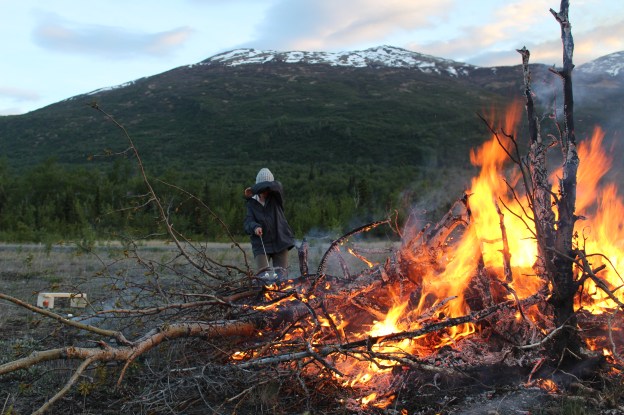
Things have been very hot in Alaska.  There has been a tragic fire just north of Anchorage.  Things are too hot.  The same thing happened at my church’s coffee shop campus.  Twelve-one-hundred caught fire.  That is an exaggeration.  The mulch caught fire.  I spent my Saturday afternoon spraying down the mulch and turning it over.  The heat is getting to me.

In this installment of my mission to record all the commands in scripture, the heat will get to the Israelites.  The ex-slaves can’t handle this Yahweh-god.  He is too strange for them.  He isn’t controllable like the other gods.  By the end of it all though, God will command them to build a tent just for him.  Ready or not, God will dwell with his people.

Exo 30:23, 34 “Take the finest spices: of liquid myrrh… cinnamon… aromatic cane…  Take sweet spices…”  Everything before this has been the same future-tense commands as the Ten Commandments.  The people aren’t stationary yet. They aren’t building an altar of incense or taking a census of all the land.  But they do have olive oil and spices, so they can begin consecrating things now.  This is a metaphor for how we should live our lives.  God does have big beautiful plans for us.  We may one day build altars and survey far off lands.  But today, we can claim what is around us as holy.  We have the common things, the everyday things, oil and spices.  Holiness is for today, not for the some-day.

Exo 31:2 “Look!  I have called by my name Bezalel.”  The command is for Moses to “look.”  God is calling Moses to see the reality of what he has done. He put his Spirit on the artisan.  Artistic talent, inspiration, is miraculous.  The God of the slaves is not above being a muse, but he is a muse in control.

Exo 31:13 “Speak to the people of Israel…”  The instruction for the people is “You shall keep my Sabbaths” but the actual command is for Moses the prophet to speak to God’s people.  I am curious to know how the people heard this.  We think about Sabbath regulations as ancient and a given, but for these people they were new.  When God said, “It is a sign forever,” he was saying a new thing to these people.

Exo 32:7, 10 “Go down… let me alone, that my wrath may burn hot, that I may make a great nation of you.”  Moses is commanded to go down the mountain so that God can charge his laser cannon and blast the idolatrous people.  The golden calf caused this moment of great testing for Moses.  Abraham was tested by a knife and the life of a son dumb enough to carry the wood.  Moses was tested with God’s wrath and the life of thousands dumb enough to worship their jewelry.  But the test for Abraham was to trust that God would provide.  The test for Moses was to trust that God would show mercy.

Exo 32:12, 13 “Turn from your burning anger… relent from this disaster… Remember Abraham…”  Did Moses quiver when he said this?  These are the three most daring imperatives so far in scripture.  If the word “relent”, nacham, bothers you, the last time it was used is Gen 6:6 when God “was sorry” for making humanity right before he drowns everyone.

I’ll indulge in a theological digression on this verse.  At a simple level, these two passages (and any passage talking about God’s arm, hands, face, etc.) is an anthropomorphism.  Where is your mind?  In your head.  Where is God’s mind?  But, if an ancient Hebrew culture could mean mind as the Greek idea of “will” (They wouldn’t. They didn’t have a pompous view of the humanity, Psa 8:4.), then certainly God’s will is different than ours.  When I change my will to a “better choice” it is because I have new data, and I was on a “less-better choice” originally.  If God actually changes the stream that his will flows down, it would not be because of a lack of data or because he was doing something “less-better” before.

Exo 32:27 “Every man, put his sword on his side… go over and return from gate to gate… and kill.”  There are four imperatives in this verse.  Moses is uttering the commands of Yahweh.  He relented from the plan to wipe the people out and make Moses the boss, but he did not relent from justice.  Interestingly, the word “go over” (most translations say “Go back and forth”) is the same root as Exo 12:12 when God pass-overs Egypt and kills the slave masters’ firstborns.

Exo 32:34 “Now go.  Lead the people where I told you… when the time comes I will punish.”  Yahweh resumes regular relations with his people.  He tells the prophet what’s up, then the prophet tells the people.  However, things aren’t regular at all.  It sounds like God is putting punishment off to a later date.

Exo 33:1 “Depart! Go up from here.”  Yahweh is telling the people to get back on track.

Exo 33:5 “Tell the Israelites… put off your ornaments.”  God commands Moses to command the people to get simple.  God is resetting the relationship from Sinai forward.  The golden-calf really messed things up.  Yahweh becomes more ornate in his dealings with the people (Tabernacle vs. Mountain Top) and the people become less ornate.

Exo 34:1 “Cut out for yourself two tablets of stone like the former ones.”  Yahweh is really resetting things.  Interestingly, Moses is looking for what God is like in 33:18, “show me your glory.” Moses expects some big shiny thing, but here, God shows what he is like by doing a remaking thing.

Exo 34:2 “Be ready by the morning.” God is calling Moses back up to his mountain top post like in Exo 33:21, “You shall stand there on that rock.”  And as far as “be ready”, this probably references all the purification rites laid out in Exo 19.

Exo 34:11, 12 “Keep watch of what I am commanding… Keep watch that you make no covenant” Some translations use “obey,” however shamar usually is the term for holding down the fort.  God wants the people to take heed of how war is going to happen in the Promised Land.  The Israelites are not allowed to sign treaties with the pagan kingdoms.

Exo 34:27 “Then the LORD said to Moses, ‘Write down the words… a covenant with you and Israel.” A new covenant exactly like the old one except for the passage of time, betrayal and the death of several thousand Israelites.

Exo 34:34-35 “This is the word that the LORD commanded, ‘Take an offering.'” Moses challenges the people to provide for the tabernacle.

That’s it.  Yahweh doesn’t speak again until after the tabernacle is built.  Chapters 35-39 are “They built this… They crafted that.”  In chapter 40 Yahweh shows back up, but the commands are all in the future tense, “You will anoint this… you will place that.”  The book of Exodus ends with the discussion of God’s presence.  It answers the question, “So, how can this Yahweh-god actually dwell with these stiff-necked people and not destroy them?”  The answer, a really pretty tent.  Now God just needs to teach them how to use it.

God’s Commands: Exodus 20-29

Surprise!  The ten commandments are not as they seem.  The ex-slaves, the Israelites, are afraid of their rain-frogs-from-the-sky God, and cherubs aren’t just a type of tomato.  It’s another edition of me making an addition to my cataloging the imperatives in scripture.

Exo 20:12 “Honor your father and your mother, that your days may be long in the land that the LORD your God is giving you.”  None of the other members of the Ten Commandments are actual imperatives.  Confession, I have lied to you (oops #9).  Some of the most powerful commands in scripture grammatically are future tense, “You will never do X.”  More specifically the ten commandments are imperfect tense. They can never be completed, or they are in process.  So the question is, “Why is the command about parents imperative?”  Short answer, most of the commands are looking forward to a time when the people are stationary enough to have a full society (courts, metallurgy, temples, property, etc.) but everyone has parents (notwithstanding Peter Pan and crew).  But, I have another guess; the honoring of parents is the only one of the ten that is not eternal.  For all eternity, stealing is not what God wants, but by the time of Jesus it appears that family ties are becoming less important (Mark 3:33; Mark 12:25).  God specifically says, “You do this now” because now is all we’ve got to honor our parents.

Exo 20:19 “You speak to us, and we will listen; but do not let God speak to us, lest we die.” The people don’t want God talking to them any more.

Exo 23:21 “Pay careful attention to him and obey his voice; do not rebel against him, for he will not pardon your transgression, for my name is in him.”  God is warning the people against turning against their helping guide.  The two commands are lit. ”  This is similar to Jesus warning about the Holy Spirit (Mark 3:29).  If God sends spiritual help you and you rebel, life is not the reward.

Exo 24:1 “Then he said to Moses, “Come up to the LORD, you and Aaron, Nadab, and Abihu, and seventy of the elders of Israel, and worship from afar.” The command “come up” seems normal, but this is a big time empathy moment for God.  In the last half of Exo 23, Yahweh tells the people they will spend the first couple generations in the land engaged in bloody conflict.  This is deflating news for anyone, especially recently freed and sunburned slaves.  The carrot to the stick is the opportunity to draw close to Yahweh.

Exo 24:12, 14 “Now the LORD said to Moses, “Come up to Me on the mountain and remain there, and I will give you the stone tablets… But to the elders [Moses] said, “Wait here for us until we return to you.”  God commands Moses to go higher.  Moses tells the elders to stay midway up the mountain.

Exo 25:2 “Tell the sons of Israel to raise a contribution for Me; from every man whose heart moves him you shall raise My contribution.”  God commands the prophet Moses to proclaim what the people should do.  Interestingly, this is the first occurrence of terumah in scripture.  The traditional word for offering, minkhah, first used in Gen 4:3 with Cain and Abel is the general term for stuff offered to God/gods (Lev 2).  The contribution Yahweh calls for here is a new thing because it is intended not for the altar but for the construction of the worship center, the tabernacle.

Exo 25:19, 40 “And make one cherub… and see that you make [the lamp-stands] according to the pattern..”  God teaches the people how to make a holy place.  In v40 there is the added command of “see”, God commands their mind’s eye to follow what they saw on the mountain.

Exo 28:1 “Then bring near to yourself Aaron your brother, and his sons with him, from among the sons of Israel, to minister as priest…” Moses’ relationship to Yahweh has progressed.  The first words from Yahweh to Moses were “Moses, Moses… don’t come near” (3:3, 5)  Now Yahweh tells his prophet to command priests to come near.

Exo 28:42 “And you shall make for them linen breeches to cover their bare flesh; they shall reach from the loins even to the thighs.” The translations have vv31, 36, 39 and 42 all as similar instructions on how to dress the priests, “You will make…”  However, only v42 is a true imperative, and it is an imperative singular.  Moses is intended.  There is no obvious theological difference unless God wants to hit home to Moses that he alone must make the priests’ underwear.

Exo 29:1 “Now this is what you shall do to them to consecrate them to minister as priests to Me: take one young bull and two rams without blemish…”  God begins the final instructions to lighten Moses’ priestly load.  The specific imperative is “take one young…”  These bulls’ are an exchange for the lives of the priest.  The symbolism is that God’s holiness would consume anyone who would minister in the tabernacle.  Interestingly v1 emphasizes what Moses must do, but the end of the chapter has “So I will consecrate the tent of meeting and the altar and will consecrate Aaron and his sons to serve me as priests. Then I will dwell among the Israelites and be their God.” (44-45).  Moses consecrating actions are preparation for the main event, God’s movement and indwelling.

In Exodus God has heard the people.  He has freed the people.  He gave the people sustenance, manna and quail, but now God has given them life.  In Exodus 20-29 God has given his people Torah and the priesthood.  These tools of consecration will prepare the people for Yahweh to be their God.

God’s Commands: Exodus 13-19

In the story of Exodus, God has freed a people, but they are not yet his people.  After the Passover, most of the liberated mass would not be able to single out Yahweh in a lineup of deities.  Their devotion is an “I’m with him” and not an “I’m for him.”  I am working through all of scripture sifting out the imperatives, the commands issued by God.  Sometimes I stop off to examine imperatives given by humans, but as we just read in Exodus, even a man-god’s commands don’t amount for much.  What will God do with this new people leaving Egypt?

Exo 13:2 “Consecrate to me all the firstborn.”  The verb for consecrate is the verbal form of the word holy or set apart, qodesh. The people inherently are “set apart” in the ancient world.  The rag-tag group of Hebrews are the only group of freed slaves running around.  They had no identity.  The temptation to blend in would have been palpable.  But God turns up the awkwardness, “The world looks at you as different, but be even more set apart.”

The rest of chapter 13 is instructions from Moses on how to behave in the future.  God only need to say, “Be holy to me” (v2).  The rest falls in line, much like the “be blameless” of Gen 17:1.  One imperative is enough.

Exo 14:2 “Tell the people of Israel to turn back and encamp.”  The command is for Moses to tell the people the plan.  God hasn’t forgotten Pharaoh.

Exo 14:13 Moses exhorts the whiny people, “Stand firm!  See the salvation of the LORD!”  The phrase “fear not” is not a true imperative.  Obviously, the people are already fearful.

Exo 14:15-16 “Tell the Israelites… Lift up your staff… stretch out your hand… divide the sea.”  All these powerful commands are given to Moses after God asks, “Why Moses do you cry to me?”  The tone sounds similar to Mark 6:37, “You feed them.”  Notice, this is another staff-hand pattern miracle.

Exo 14:26 “Stretch out you hand…. so that the waters may come back.”  God reminds Moses, “Don’t forget to close the door.”

Exo 15:21 “Sing to the LORD.”  Miriam is the first worship leader.  Moses has commanded the ex-slaves to prepare meals and pack light, but Miriam’s short song commands the community to do what they were made for.  Moses’ song is all “me and God.”

Exo 16:12, 16 “I have heard the grumbling… speak to them… Gather of it as much as you can eat.”  The quail and manna are a novel give-and-take of God’s commands and the people’s desire.  The goal: after God has filled them, “Then you shall know that I am Yahweh your God.”  Yahweh is going to stand out in the lineup.

Exo 16:23, 25 “Bake… boil… lay aside till the morning” (v23).  Moses is teaching the people how to prepare for Sabbath.  Six days they walk outside their tents and depend on God’s provision of manna and quail.  For the seventh day, they get ready for a different kind of provision, God’s rest.  “Eat it today” is the command for the manna that miraculously lasts through the night to the Sabbath (v25).  Notice that the day to day provision consisted of God creating, the Sabbath provision consisted of God making something not face decay and destruction.

Exo 16:29, 33 “See!… remain each of you in his place” (v29).  God commands the people to observe what he has done and rest in it.  “Take a jar, put an omer of manna in it, and place it before Yahweh” (v33).  Three of God’s commands spoken by Moses give ceremony to the “See!” of v29.  Like Noah’s rainbow, God creates the best memorials.

Exo 17:5 “Pass on before the people… take the staff… and go.”  The people don’t realize how near danger they are.  “Why do you test Yahweh?” (v2).  The verb “pass” is the same verb from Exo 12:12 “I will pass through the land of Egypt at night, and I will attack.”  God addresses their grumbling for water by showing the leaders his presence, “I will stand before [you and the elders] on the rock” (v6).

Exo 17:14 “Write this as a memorial in a book and recite it.”  God has commanded a new thing, writing.  Notice again that God creates his own memorials.  The word “recite” is a form that usually means place (Gen 2:8 God “places” man in the garden).  The verb is more about where the word lands and less on the manner of speaking.

Exo 18 deals with Jethro and the administration of the people.  God does not directly speak.

Exo 19:12, 15, 21.  God is concerned with proximity, but Moses and the priests are concerned with purity.  God commands two true imperatives in this passage, “You will say, ‘Take care/guard yourselves from going up” (v12) and “Go down!  Warn the people, lest they break through to the LORD” (v21).  Getting too close to the mountain is dangerous.  How does Moses convey this to the people? “Be ready for the third day; do not go near a woman” (v15).  God had just commanded Moses to tell the people how to setup a boundary and all Moses says is, “Get ready.  Don’t have sex.”

God creates his own memorials.  That is a good thing to, because his people are on the move.  Geographically they are moving, but their identity also is shifting.  For the first time in Exodus, the Hebrews have a clue as to who they are following.  This Yahweh does strange and marvelous things, but unlike the Hebrews’ last god, Yahweh’s biggest command so far has been rest.  Next time, God will add ten more commands.

God’s Commands: Exodus 7-12

Two gods, two peoples are about to battle to the death.  The main event is Yahweh vs. Pharaoh.  I am cataloging all of the imperatives in scripture.  Last time we saw how Exodus paints this picture of an Israelite God who issues commands but provides the means of obeying.  Pharaoh on the other hand gives harsh commands, “More bricks,” but he makes it impossible to fulfill them.  In chapters 7-12 one commander will emerge victorious.

Exo 7:1 “See!  I have made you [like a] God to Pharaoh.”  The command addresses Moses’ vision like in 4:21.  English translations add the “like a” so we don’t think God is a polytheist.  This verse is tied to 4:16 because there Moses and Aaron are established as a god-prophet duo.

Exo 7:9 “Give a miracle… take your staff… cast it down.”  God is scripting the conversation, “Pharaoh will command this, then you will command this.”  Interestingly, God knows what both sides should say.  Also, many translations have “Do a miracle” or “prove yourselves”.  The verb more literally means “give.”  Pharaoh is commanding that Moses give him something as tribute.  This is no open hearted or curious inquiry.  “You say you are from some other god, then give me a miracle.”

Exo 7:15, 16, 19 “Go to Pharaoh… Let my people go… Say to Aaron… Take your staff… stretch out your hand.”  Once again God writes the script.  Pharaoh is not giving commands any more.  Notice in v22 he doesn’t even command the magicians to copy the miracle.  They just do it to cheer Pharaoh up.  He instead sulks into his palace.

Exo 8:1, 5 “Go to Pharaoh… Let my people go… Say to Aaron… Stretch out your hand.”  God’s commands for Pharaoh are the same as the first plague.  The script for Aaron has changed.  The commands for Aaron in 7:19 include imperatives targeting the staff and Aaron’s hands.  However, v5 has “hand with your staff.”  The staff has been downgraded some how.  Can’t have Aaron do the same motions for the same effect.

Exo 8:8-9 “Entreat with Yahweh… Have the honor of [naming] the time.”  Moses is killing Pharaoh with kindness.  Pharaoh is viscerally begging Moses to act and Moses is essentially saying, “Have some dignity (if you are a god), order me a time to call the plague off.”

On v7, there are no commands here, but the magicians just really aren’t helping.  “Pharaoh, sorry Moses made frogs ruin the economy.  See we can make more frogs.”  You aren’t helping.

Exo 8:16, 20, 25 “Say to Aaron… Stretch out your staff… strike the dust…  The plague of gnats is a standard staff plague, but this plague trips up the magicians (v18).  God doesn’t issue the “let my people” command before the gnats.  They just are commanded.

Exo 8:20, 25, 28 “Get up early… present yourselves… Let my people go… Go! Sacrifice to your God… Entreat for me.” In terms of hands and staff motions, the flies are a non-standard plague.  God just announces something will happen tomorrow, but “let my people go” returns.  Also, this is the first plague where Israel is treated differently.  Goshen won’t have any flies.  Pharaoh doesn’t let the people go, but he does let them sacrifice.  The entreat/plead is the same idea as v8.  Pharaoh knows when he is beat.  Notice how the pattern is shifting.  Last entreating, Moses had to remind Pharaoh of his “place as king,” but now Moses is manipulating Pharaoh’s commands.  “Letting us worship in the land isn’t your best idea.”

Exo 9:1, 8 “Go to Pharaoh… Let my people go… Take handfuls of soot…”  The plague on livestock is like the plague of flies.  It does not involve any actions on Aaron’s staff or hand or anything physical.  The “let my people” command has returned.  That’s four times so far.  Then, without skipping a beat and no conversation with Pharaoh, Moses starts throwing soot in the air.  Boils come on anything Egyptian.  Pharaoh is just becoming a reactive figure.  He isn’t leading anymore.

Exo 9:13, 19, 22, 28 “Get up early… present yourselves.. Let my people go… Send, bring your livestock… stretch out your hand… Entreat with Yahweh!”  The plague of hail has lots of parallels to the flies.  It ends with Pharaoh begging Moses to beg God, even calling on the name of Yahweh (“Who is this Yahweh” 5:2).

Exo 10:1, 3, 11, 12, 17 “Go to Pharaoh… Let my people go… “Go! The men only.  And serve… Stretch out your hand… Lift up my sins… Entreat Yahweh.”  Pharaoh is catching on to the manipulation.  Moses is changing the deal.  But, Pharaoh’s will is no match for locusts.  Locusts could completely wipe out an empire.  There is a reason Pharaoh refers to them as death.  Pharaoh now implies he has sinned.  Not just “Pray that God would stop it,” but “Pray for my sins, so God will stop it.”

Exo 10: 21, 24, 28 “Stretch out your hand… Go! Serve!… Go from me!  Watch yourself!”  Another hand command brings about three days of darkness.  This is a world of oil lamps.  Pharaoh has progressed from his reaction to locusts, “Take away death!” to promising death.  The language “you shall die” is an echo of Genesis 2:17.

Exo 11:2, 8 “Speak/instruct the people…”  Before the last plague God only commands that his prophet do what a prophet does.  Before the big stuff, the core of Moses’ relationship is to God’s people.

Exo 12:3, 21 “Speak/instruct the people… draw out and take a lamb… slaughter the paschal-lamb.”  The instruction is “Find a lamb, then slaughter the sacrifice.”  The identity of the animal changes once selected.  The common word for lamb occurs in the commands for “draw out” and “take” but the slaughter changes to the Hebrew word that we get paschal from.  God’s greatest plague demands an instruction in sacrifice.  A survey of the history of slave revolts would be interesting.  Is a sacrificial meal normal for a night before the revolution?

Exo 12:31, 32 During the Passover, no one talks.  The first words are “Get up! Go!…” and a broken Pharaoh cries, “Take your flocks… Go!”  Translations make “and bless me also” sound like it is the same as “take” and “go,” but it actually is not an imperative form.  Pharaoh has issued four commands for the slaves to be free, but he doesn’t dare command his blessing.

“And Jacob blessed Pharaoh and went out from the presence of Pharaoh.” Gen 47:10.  That is what the relationship used to be like.  The story of Exodus is god vs. God, slaves vs. masters, but also friend vs. friend.  God’s promise to Abraham was “all the nations of the earth will be blessed.”  Joseph’s family tried that out.  They came to Egypt, and they got burned.  But, we see that some of the slave-masters understood.  “The LORD had given the people favor in the sight of the Egyptians, so they let them have what they asked.  Thus they plundered the Egyptians” (Exo 12:36).  I usually read that verse as 1) Israel is making silent threats or 2) Egypt is too exhausted to care.  But, it seems the everyday Egyptians saw what Pharaoh didn’t.  Their empire came from these people.  Long ago these people blessed them.  This is a strange emancipation.  There is no dark period of reconstruction or lingering prejudice.  “The people are free and we are grateful for their blessing.”

The instructions for future celebrations of Passover in vv43-50 are just that, instructions for the future.  Translations use the word “shall” or “will”.  It would be interesting to do a study on how God orders the future, but that is outside of my scope.

God’s Commands: Exodus 1-6

The beginning is over, now the Exodus begins.  The Hebrews are slaves.  For the slaves, the God of Abraham, Isaac and Jacob is a sleeping god.  Pharaoh is god and king.  I am cataloging every command given by God in scripture, and by command I very specifically mean imperatives.  Imperatives are specific verb forms in Hebrew that were used for a command.  It his how a tired mom talks to her child, “Clean your room,” or a cop calls out on the bull horn, “Pull the car over.”  I recently cataloged all the commands in Genesis, now we move on to the book of Exodus. The people aren’t on the move, but God is.

Exo 1:10 “Come, let us deal shrewdly…” A Pharaoh who didn’t remember Joseph came to power.  Dealing shrewdly meant having slave masters over the Israelites.  Apparently the debt slavery that Joseph instituted was more ceremonial.  Once again, I won’t always do human commands, but this god-king’s command is pretty important for the story of Exodus.

Exo 3:5 “Take your sandals off your feet.”  The first part of this verse, “do not come any closer,” is not an imperative form.  It is more like a street sign, “No Parking” or “No Outlet”.  This sandal-removing was an ancient way of showing respect for qodesh, holy things.  But notice, God commands the holy act; the man Moses doesn’t invent it.  This will be the relationship between prophet and God for the rest of Exodus.

Exo 3:10 Lit. “And you go, and I will send you to Pharaoh, then bring out my people.” The “I will send” is sandwiched between two imperatives.  If Moses obeys, he will go with God’s authority.  When he has God’s authority, he can obey more.  This is Moses’ commissioning.  God wasn’t creating another god-king to free the people from Pharaoh.  He was creating someone who would obey.

Exo 3:16 “Go, assemble the elders of Israel.”  The imperative is the “go” and the task upon arrival is to gather the people.  God’s plan is to call out the people before crushing Pharaoh.

Exo 4:3 “Throw it on the ground.”  God demands clumsiness.  The staff turns into a serpent.  Moses’ response? “He ran from it.”  Curiously, God said, “Go, Go” but Moses didn’t budge.  The snake appears and then Moses’ sandal-less feet know what to do.

Exo 4:4 “Stretch out your hand and grasp it.”  Moses, that snake that scared you, God wants you to reach out and grab it.  God commands herpetology.  Moses isn’t fulfilling Genesis 3:15, “He will crush your head,” but we are getting closer.  This is the beginning of a discussion of Moses’ hands, yad.

Exo 4:6-7 “Put your hand into your cloak… return your hand into your cloak.”  God commands what we would take for a street magician’s “trick”, except the trick is to be afflicted and unafflicted with a lethal skin disease.  Leprosy was no joke.  God is showing Moses signs, but they aren’t happy signs.  Things are on fire, snakes appear, and now leprosy is in his dry cleaning.

Exo 4:12 “Now go.”  The same command from Abraham’s story, lek.  But now, God adds a sense of urgency and immediacy to the command.  It is important that we see what God is doing to Moses’ body.  God has made his feet more saintly (3:5); his hands powerful (4:4, 6); and now God blesses Moses’ mouth.  God has given Moses everything he needed to fulfill the command of “now go.”

Just to clarify, the “take some water” of 4:9 is not an actual imperative.  That verse is God talking about Moses’ response to a potential circumstance.

Exo 4:13 “Send someone else please.”  Moses offers up his excuse of not talking real good.  God’s command has completely missed him.  Moses is scheming how God can complete his plan without him, but God’s command was “now go.”  Moses final refusal is a reversal of the sending that God spoke in 3:10.

Notice the patterns of Moses’ refusal.  First Moses says, “I am wrong.”  God says, “I will make you right.  I will supply what you lack.”  Moses says, “Well fine.  Send someone else.  Your command is wrong.”  4:14 starts, “The LORD’s anger burned against Moses…”

Exo 4:19 “Go back.”  The same command as 4:12.  We don’t know what Moses has been doing since his conversation with Jethro.  This command from God could have been just after Moses left Jethro’s tent or some time could have passed.  The curious thing is that Moses made it seem like he wanted to return to see “if any of [his relatives] are still alive” but God cuts to Moses’ fear of “the men who wanted to kill you.”  Moses didn’t outright lie to Jethro, but he didn’t tell him the full truth of why he had to go.  Something was still troubling Moses, and it was fear.  But, God let Moses know the same command is still in effect.

Exo 4:21 “See that you perform before Pharaoh all the wonders.”  Moses was nervous about his speaking ability before, God now commands his vision.

Exo 4:23 “Let my son go.”  God is telling Moses how the exchange with Pharaoh will go down.  You take my son, so I kill your son.  God vs. god.  King vs. king.  It is not good to chain God’s children.

Exo 4:27 “Go to meet Moses.”  Aaron gets up and does it.  No questions.  No wonder he ends up with the priestly lineage.

Exo 5:1, 4 “Let my people go… Get back to your work!”  God through his prophet demands that the people be released.  The god-king commands the people back to their work.  God’s “go” is a verb for sending out, for going somewhere new.  Pharaoh’s word is the ordinary word for walking.  He is commanding the people walk the way they always have, slavery.  The real God can do new things.

Exo 5:18 “Now! Go! Work!”  The translations don’t do justice for how zealous the slave masters are.  Also, there is some interesting wordplay in “no giving straw to you, but you giving quota of bricks.”  The verbs are the same.  The true God gave Moses one task and equipped him three ways.  Pharaoh-god gave Israel one task but robs them of the means to complete it.

Exo 6:6 “Say to the Israelites.”  This seems like a normal sentence, but this is a big moment for Moses.  Most of Exodus has been a prophet-to-outsiders conversation.  God is commanding Moses to talk to the people.  This is the bulk of the prophetic role for all of scripture.  And it all starts like this, “I have remembered my covenant… say to the people.”

Exo 6:11 “Go. Tell Pharaoh.”  God restarts the diplomacy with Pharaoh with two imperatives.  The “tell” is more emphatic that the “said” of 5:1.  Pharaoh is going to get a talking to.  This is not a command to have a conversation with Pharaoh.

Exo 6:26 “Bring the Israelites out” is the narrator quoting God, but it is close enough.

Exo 6:29 “I am the LORD.  Tell Pharaoh king of Egypt everything I tell you.”  Technically, Moses isn’t ready to tell anybody (v30), but from God’s perspective, the stage is set.  He is ready to have the telling commence.

An exodus hasn’t begun, but the Exodus has.  The people aren’t free yet, but God has promised it will happen.  The only thing in God’s way is the god-king Pharaoh.  The true God gives and gives and remembers his promises.  The false god gives nothing and expects to be given everything, and he can’t even remember Joseph.  God has also started teaching Moses what a prophet will be, how he will talk, how he will wear his shoes, how he must obey.

God’s Commands: Gen 36-50

Today it ends.  We will look at every imperative issued by God in the last saga of Genesis, the Joseph story.  But how can you cover 14 chapters in one post?!  God doesn’t say much, but he does much.

Gen 36 – No imperatives here.  Esau has descendants.  People pasture donkeys and rename towns.

Gen 37:6 – I don’t cover every human imperative, but this one starts it all off.  Joseph tells his family, “Listen to my dream.”  He does use the imploring grunt, so he isn’t intending to sound like a jerk, but his dream is definitely taken that way.

Gen 37:22 – Reuben sticks up for Joseph with the cry, “Don’t shed blood!”  He is trying not to be Genesis 4.

Gen 38:8 – I only go over this one because it is confusing.  Judah commands Onan, “Go into your brother’s wife and perform your duty.”  The word for “perform your duty”, yabam, is this ancient idea of providing an heir for your widowed relative.  Sons and daughters were the social safety net.  Onan is being a jerk because he is essentially denying Tamar’s ability to have Social Security, Medicare, or a 401k (and the joys of motherhood).  Sometimes this is called the Levirate duty, which has nothing to do with Levites.  Levir means brother-in-law in Latin.

Gen 38:25 – So Judah knew what was right, but by delaying and delaying we end up with a mess.  Tamar is on her way to be burned for prostitution and says, “Identify please whose these are” and she points to the signet, cord and staff given to her by her John.  Interestingly, Tamar has not issued any imperatives in this whole story.  She has been tossed around by these men who are supposed to be taking care of her.  Judah couldn’t recognize his duty; he couldn’t recognize this woman as more than a prostitute; but he could recognize his stuff.  Judah responds, “She is more righteous than I.”  Duh!

Gen 39:7 – Potiphar’s wife commands, with no imploring grunt, “Lie with me.”  This is the wife of Joseph’s boss.  Joseph says no.  And just to point out because some translations rough up the translation to “Have sex with me,” Potipher’s wife is not using the same penetrative language of Genesis 38:8 and elsewhere, “Go into” or “Come into”.  Potiphar’s wife is not acting like a brute but is luring Joseph with all the tangles and half truths of a “loving” affair.

Gen 40:8 – Two prisoners tell Joseph they have troubling dreams.  Joseph responds, “Tell them to me, please.”  We often paint a stoic Joseph biding his time in prison.  His first vocation was interpretation.  He has had success in jail, but he has not used his gift.  He could have just commanded these prisoners (v22), but he says, “Please, let me use my gift.”

Gen 41:55 – Pharaoh tells the starving masses, “Go to Joseph.”  Not the command of God, but a god-king.

Gen 42:16-19 – “Send one of you… remain jailed/confined” is sworn by the power of Pharaoh.  A harsh command by Governor Joseph.  The focus is on imprisonment.  All the brothers have to stay but one.  How will they get enough grain back?  But three days later, “Do this and live… go and bring/carry grain…”  These commands are done under the fear of God, not Pharaoh-god.  Brother Joseph now focuses on the life-giving food.  Notice that the verb for “remain confined”, asar, is an imperative/command in v16 but is now a weaker form in v18.  Jailing stopped being Joseph’s focus.

Gen 45:19 – Pharaoh commands a command.  “You are commanded to say, ‘Do this: take wagons…” and haul everyone up to Egypt.  The Pharaohs, even when they are nice, are always telling Israel’s family what to do.

Gen 47:19 – “Buy us… give us seed.”  They loved life more than liberty.  This whole passage skirts over the fact that Joseph is enslaving all of Egypt, Goshen not excluded.  Joseph is a perverted messiah, “You have saved our lives; may it please my lord, we will be servants to Pharaoh” (v25).  This is what a political messiah looks like.

Gen 50:17 – “Please forgive… please forgive” is the desire of the brothers.  They are very polite now.  They enslaved one, Joseph has enslaved a nation.  “Do not fear, for am I in the place of God?”  That is a loaded question.

The last command in Genesis is a cry for forgiveness.  This has been the trajectory of creation.  From Gen 1:22, the first command, “Be fruitful, multiply, and fill” to Gen 50:17, “please forgive… please forgive.”  It appears that the first is being obeyed, but things certainly aren’t right.  Things are evil, but Joseph gives us hope.  He sees evil and can say, “God meant it for good” (50:20).  But even then there is a double meeting.  The good of slavery?  Even when men are trying to listen to God, evil is close at hand.  Humanity is meandering but can’t change it’s downward spiral.  They need God to do something decisive to bring them out of the reality of Lamech’s “seventy-sevenfold” revenge.  The only way they know how to live is to heap evil upon evil.  They need God to bring them out of the left-to-own-devices state.  Humanity needs an exodus.